
Game Overview
What is Hexamatch?
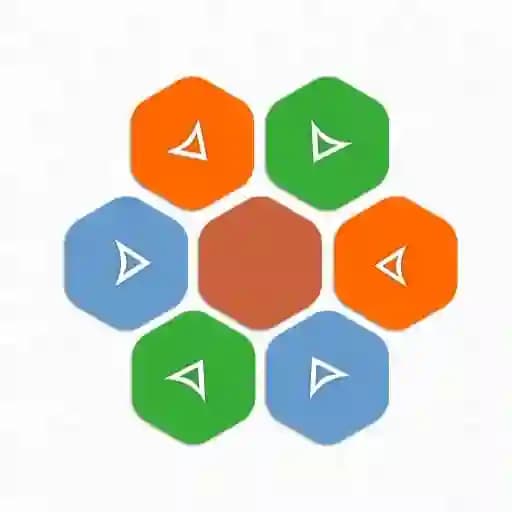
Hexamatch is a logic-based puzzle game where players strategically manipulate hexagonal tiles to create color-matched stacks. By interacting with directional hexagons, you'll push and slide pieces across the grid to solve increasingly complex spatial challenges. Combining pattern recognition with tactical planning, this brain-teasing experience offers a fresh take on match mechanics that rewards careful forethought over quick reflexes.
Game Features
• Directional hexagon mechanics: Each tile moves only in its facing direction, pushing adjacent tiles
• Color-matching objectives: Create vertical stacks of three or more same-colored hexagons
• Spatial puzzle challenges: Navigate tight grids where every move creates chain reactions
• Progressive difficulty: Puzzles evolve from simple arrangements to complex configurations
• Minimalist design: Clean visual style focuses attention on strategic decision-making
How to Play Hexamatch?
- Observe the grid of directional hexagons and identify potential color matches
- Click on any hexagon to activate it - it will slide in its facing direction
- Moving hexagons push all tiles in their path, creating chain reactions
- Strategically reposition tiles to form vertical stacks of matching colors
- Plan multiple moves ahead to avoid creating deadlocks or unmovable clusters
Controls:
- Mouse: Click any hexagon to move it in its facing direction
- Keyboard: Use arrow keys or WASD to highlight hexagons, then press Space to move selected tile
Frequently Asked Questions
What happens when hexagons reach the grid edge?
Hexagons stop moving when they contact the grid boundary. Tiles can't move off the play area, so plan moves to avoid trapping key pieces against edges.
Can I undo moves if I make a mistake?
While there's no formal undo button, most puzzles allow enough flexibility to recover from suboptimal moves through creative repositioning of other tiles.
How are puzzles structured across levels?
Levels introduce new mechanics gradually - early puzzles focus on basic movement rules while later stages feature multi-directional tiles and complex chain-reaction requirements.