
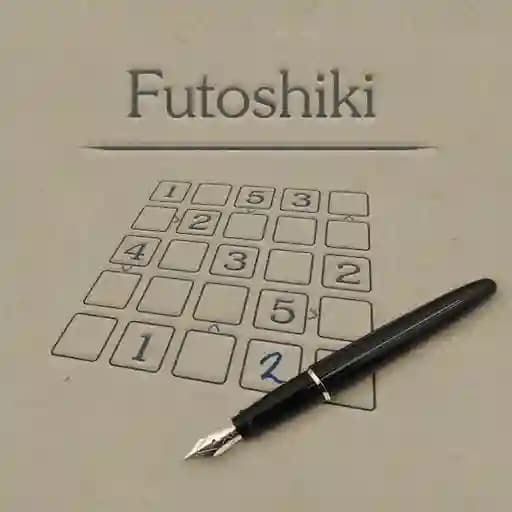
Game Overview
## What is Futoshiki?
Futoshiki is a popular Japanese numeric puzzle game that challenges players to fill a grid with numbers while adhering to specific rules. Similar to Sudoku, the game requires placing numbers 1-5 in each row and column without repetition. Additionally, players must respect the relational signs (inequalities) placed between certain cells, adding an extra layer of strategy. With its built-in puzzle generator offering three difficulty levels—easy, medium, and hard—Futoshiki promises a unique and exciting experience for fans of logic-based games.
## Game Features
• **Built-in Puzzle Generator**: Creates puzzles with three difficulty levels (easy, medium, hard).
• **Relational Signs**: Inequality signs between cells add complexity and challenge.
• **Two Background Themes**: Customize your gameplay with different visual styles.
• **Notes Mode**: Toggle notes on and off by tapping on a selected cell for easier problem-solving.
• **Unique Solutions**: Each generated puzzle guarantees only one correct solution.
## How to Play Futoshiki?
1. **Fill the Grid**: Your goal is to place numbers 1-5 in each row and column without repetition.
2. **Respect Inequalities**: Pay attention to relational signs (e.g., ">" or "<") between cells. These signs indicate that one number must be greater or less than the number in the adjacent cell.
3. **Use Notes Mode**: Tapping on a selected cell toggles notes mode on and off, allowing you to jot down possible numbers for that cell.
4. **Solve the Puzzle**: Combine logical reasoning and attention to detail to fill the grid correctly.
## Frequently Asked Questions
**What is the grid size in Futoshiki?**
The game uses a 5x5 grid, making it smaller but equally challenging as Sudoku.
**How do the relational signs work?**
Relational signs indicate whether a number in one cell must be greater than (>) or less than (<) the number in an adjacent cell. Ignoring these signs will make the puzzle unsolvable.
**Is there always a unique solution?**
Yes, every puzzle generated by the game is designed to have only one unique solution.